Skip to content
img-forge Voice Services Plans Company Docs Blog

Field guide · v0.1.1

The Edge That Thinks

A field guide to edge-native generative systems

Static public edition. Verified through . Published .

Public v0.1 includes

  • Free introduction and Chapter 2
  • Production checklist
  • Reference architecture
  • Dated release ledger

What this is

This is the public v0.1 surface for The Edge That Thinks: a practical field guide for teams building AI products on edge-native infrastructure.

The premise is direct: a model call is not a product architecture. Production systems need explicit state ownership, durable units of work, governed tool access, retriable side effects, and observable routing decisions.

Free public edition

The landing page is intentionally useful without purchase. It publishes the introduction, Chapter 2, a production checklist, a reference architecture, and a dated release ledger.

  1. Begin with architecture, not the model
  2. What edge-native means here
  3. The production shape
  4. Code first, inference second
  5. Chapter 2: The request is not the unit of work
  6. Production checklist

Editable diagrams

Diagrams are committed as Mermaid source plus SVG output under /public/field-guide/figures. They are designed to remain legible in grayscale and avoid color-only meaning.
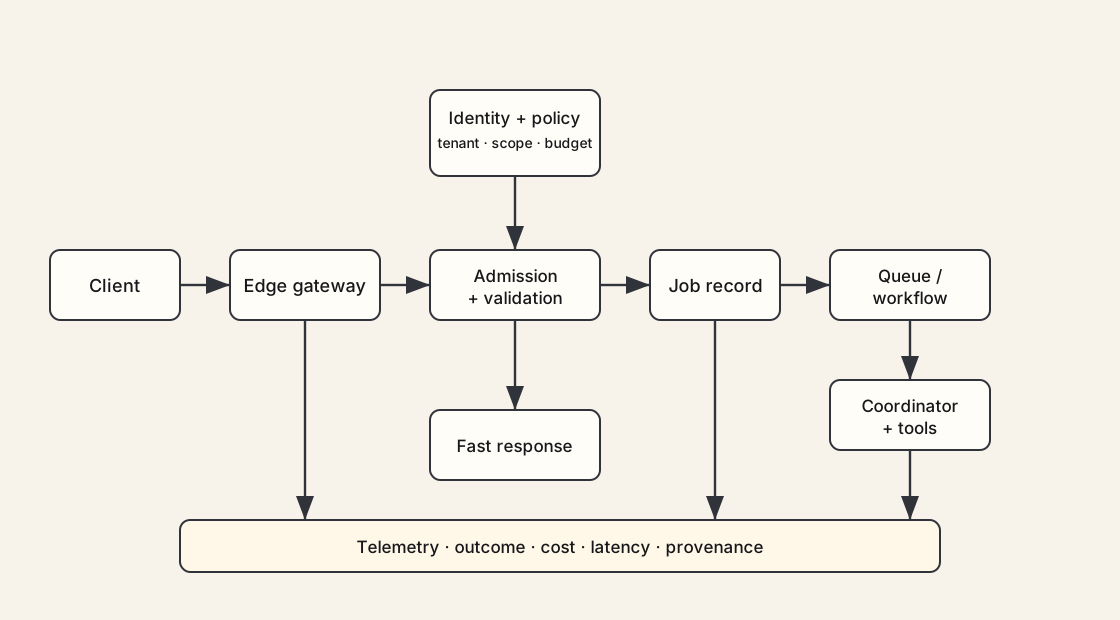
Reference architecture showing client requests flowing through an edge gateway, admission, policy, job records, queues, coordinators, inference, artifacts, and telemetry.
Reference architecture. The minimum separation of concerns for a generative system that may invoke inference or cause a consequential side effect. Mermaid source
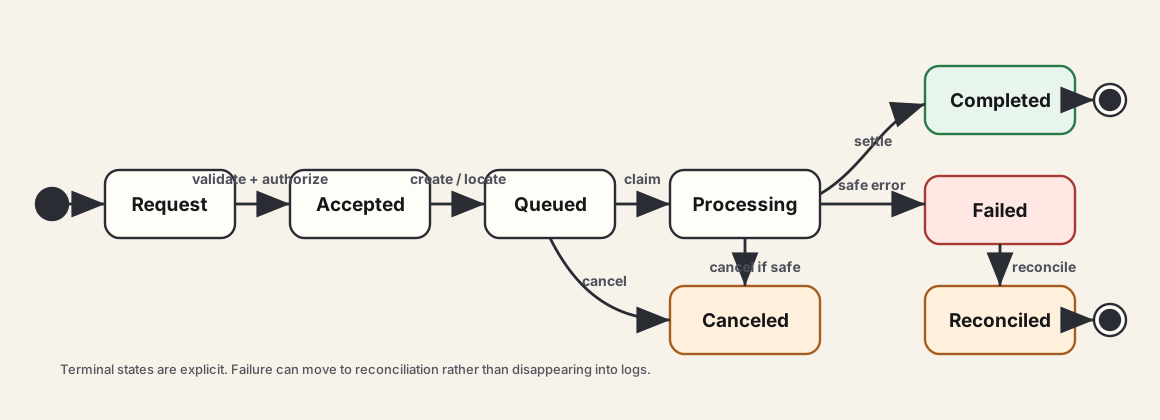
Lifecycle diagram showing a request becoming an accepted job, then moving through queued, processing, completed, failed, canceled, and reconciled states.
Request and job lifecycle. An HTTP request should create or locate durable work. Cancellation is a state transition: queued work can be canceled directly; processing work can be canceled only when the coordinator can safely stop or ignore the side effect. Mermaid source
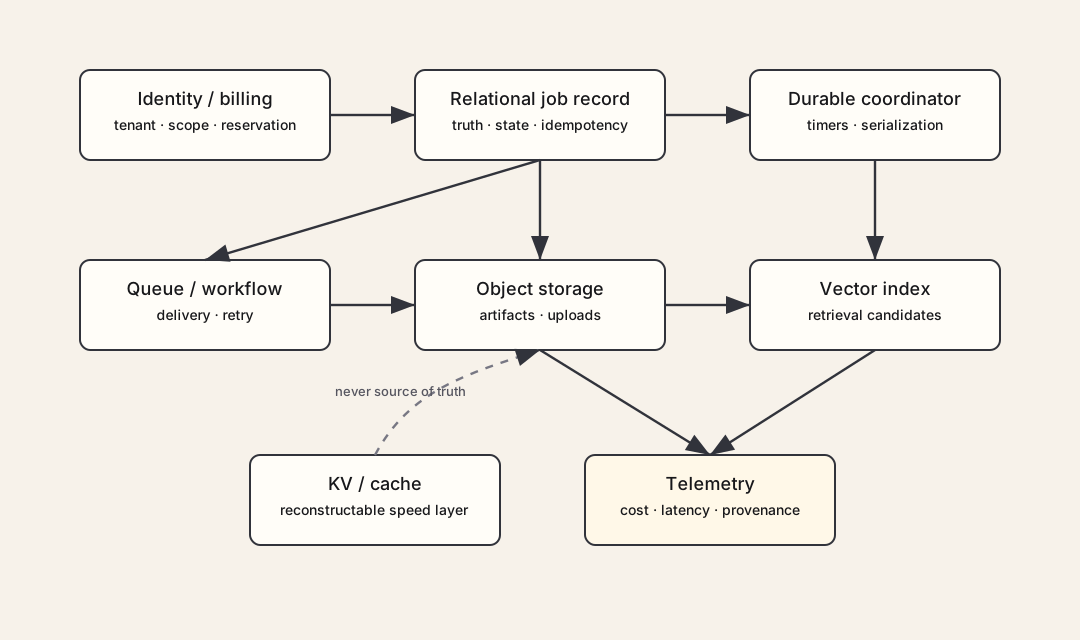
State ownership map assigning identity, job truth, live coordination, transport, artifacts, retrieval, cache, and telemetry to separate owners.
State ownership. Each consequential fact needs one owner. Storage primitives are implementation details after the ownership decision is made. Mermaid source
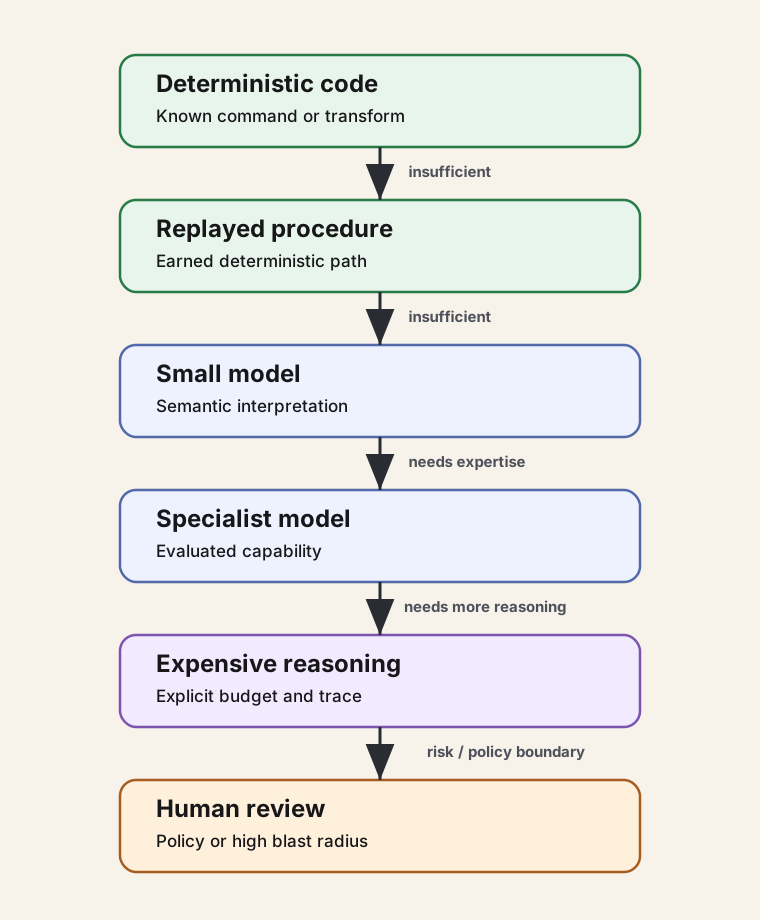
Routing ladder from deterministic code through replayed procedures, small models, specialist models, expensive reasoning, and human review.
Routing ladder. Start with the cheapest proven capability. Escalate only when evidence, capability, risk, or policy requires it. Mermaid source

Checklist preview

The checklist is a launch conversation, not a maturity score. Start with these gates before adding model calls to production work.

Contract and state

  • Is work a request, job, session, or workflow with explicit cancellation and terminal states?
  • Is there one authoritative record and an idempotency key for every effect?
  • Can duplicate delivery, timeout, partial completion, and retry converge safely?

Identity, models, and tools

  • Is tenant scope resolved server-side for reads, retrieval, and tools?
  • Are prompts, source data, derivatives, and telemetry separately classified?
  • Can deletion reach artifacts, vectors, cache, and queued work?

Reliability and operations

  • Can long work return an accepted job rather than an implausible finished response?
  • Is large data kept out of queues and model context?
  • Are downstream failures clear states rather than fabricated output?

Early access

Get updates or request a reviewer copy

The paid edition is not linked yet. Use this form for early-access updates, reviewer-copy interest, or companion-resource notices.

Data owner
Stackbilt LLC · admin@stackbilt.dev
Retention
Field-guide interest records are retained for 12 months unless a working relationship starts or deletion is requested.

See the privacy policy.

Sources policy

Externally checkable release claims cite official Cloudflare documentation, changelog, or blog sources and carry a visible verification date.